Beyond Live Data: Accessing the Full Power of Ignition's Tag Database With i3X

There are many ways that Inductive Automation is taking an active role in shaping the future of industrial data interoperability. You probably know that we’re champions of OT-IT convergence, Unified Namespace, and open standards like MQTT and OPC UA. There’s another way we’re pushing interoperability forward, which you may not have heard as much about: our membership in CESMII (Collaborative Ecosystems for Smart Manufacturing Innovation Institute).
Inductive Automation and CESMII
CESMII promotes interoperability as part of its mission to democratize and accelerate the adoption of smart manufacturing — a mission that we at IA are very much aligned with. In this blog, I’ll tell you about an exciting new project that IA and other leading companies have been working on with CESMII that will significantly advance both smart manufacturing and interoperability.
Before diving into the new project, though, let’s quickly take in a bigger picture of what CESMII and its members are trying to accomplish, specifically CESMII’s three Smart Manufacturing Architecture Imperatives for standardized manufacturing data interoperability.
The first imperative calls for manufacturers to define and maintain their operational data models using an open standard. Ignition enables this by allowing standard models to be imported as User-Defined Types (UDTs).
The second imperative is to instantiate those models with real data, build relationships between objects, and persist both history and metadata. This is a natural fit for Ignition, where the tag database offers a wealth of information, encompassing live values, context, alarm history, tag history, relationships, and models.
The Imperative for an Open Standard API
CESMII’s third imperative is to establish a standard, common API that a wide array of platforms can use to commoditize access to manufacturing data.
Using a standard API will deliver significant benefits:
- It will help manufacturers fight back against the proliferation of data silos and the growing number of incompatible APIs.
- It will enable products from different vendors to discover and understand data across the supply chain without custom integrations or remapping.
- It will empower application developers to build once and deploy across multiple back-end systems.
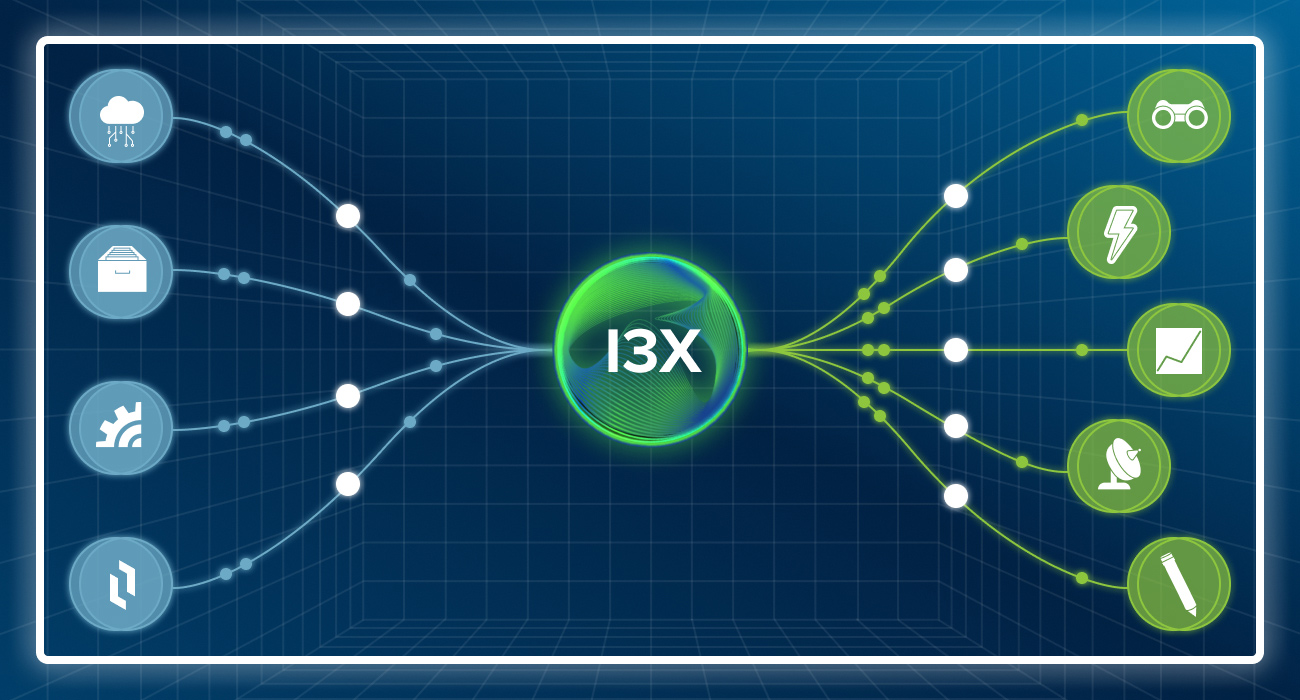
That open standard is i3X (Industrial Interoperability API), which is a REST API that can discover namespaces, explore object types, query real-time and historical data, navigate relationships, and subscribe to events, forming a foundation for analytics and AI applications.
The i3X standard was developed by the i3X working group, which I’m a member of, on behalf of IA. The working group also includes colleagues from AWS, GE Appliances, Georgia-Pacific, HighByte, Microsoft, Rockwell Automation, Siemens, and ThinkIQ. After working together on this project for over a year, it’s exciting that we’ve begun to share what we’ve built with the public.
I3X at the ProveIt! Conference
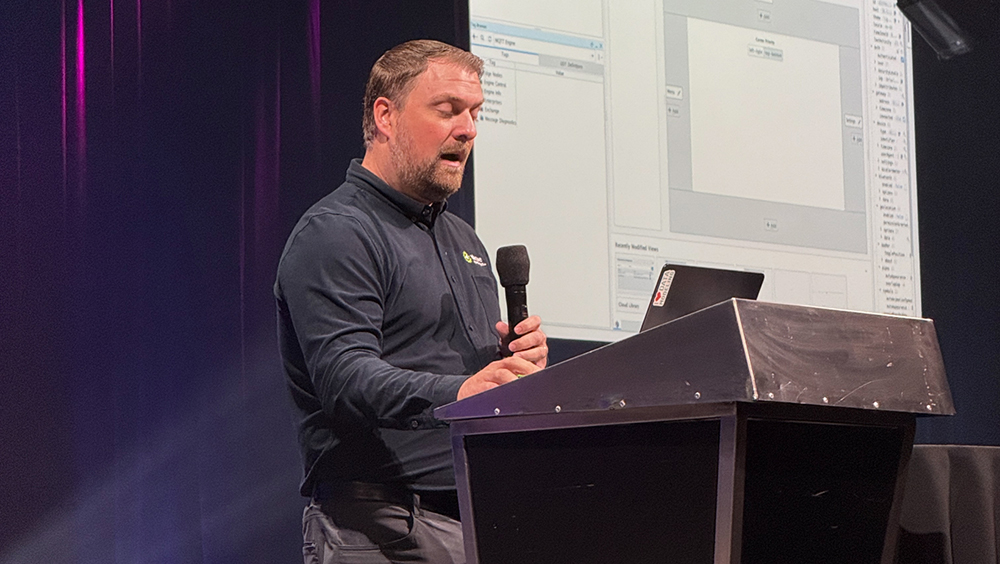
At the ProveIt! 2026 Conference in February, I and several other members of the i3X working group participated in a CESMII keynote session titled “Building Better Namespaces with CESMII,” where we demonstrated an alpha prototype of i3X. Each presenter seamlessly connected their solution through i3x, and each presenter added more layers to the same data set.
In my part of the session, I demonstrated connecting to controllers to build UDTs within Ignition and bringing in external smart manufacturing profiles. I showed how to connect to an Ignition endpoint and discover all namespaces, including Ignition UDTs and machine identification types. Then I highlighted the ability to see live data, history, and even alarms within a single pane of glass using the i3X Explorer. Additionally, I showed a converter tool that downloads XML Nodesets to create and map new UDT definitions to PLCs. (You can watch the recorded session here.)
We got very positive feedback from the attendees at ProveIt!, because it was the first time that they got to see the value of being able to access the full extent of the data.
Native i3X Support Coming, Endpoints Resource Available Now
As I said, Ignition’s tag database provides a wealth of information, and i3X will give Ignition a way to expose the full power of its tag database to third-party applications. Exposing Ignition's existing tag database information with i3X was fairly simple because Ignition's design aligns perfectly with how i3X works.
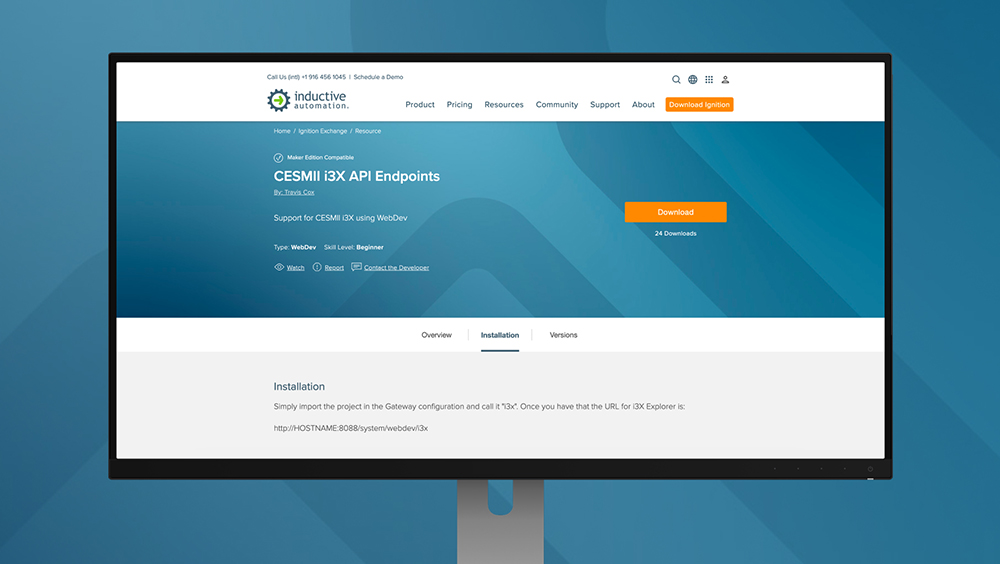
Inductive Automation is working to build native i3X support into Ignition, so expect to see that in a future release. For now, you can download the CESMII i3X API Endpoints on the Ignition Exchange, which you can use along with the i3X Explorer tool to validate your data implementation, without having to write up your own client for testing.
Ignition’s support for standards like SQL, MQTT, and now i3X is a major reason that it’s recognized as the most open and flexible industrial application platform in the world. We will always be committed to leveraging the power of open standards, so that you can always feel confident that different systems in your operations will work together smoothly.